










One of the most overlooked aspects of fiber optic maintenance and troubleshooting is keeping the fiber optic connector endfaces clean.
A dirty fiber cable can slow down, or inhibit, network traffic.
As we will discuss later in this article, a dirty fiber connection can either slow down or completely inhibit network traffic.
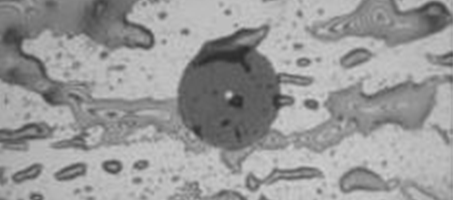
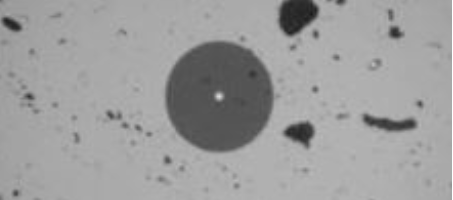
Keeping fiber connections clean is different from any other type of cleaning due to the relative sizes of the connectors compared to the particles and contaminants that typically reside on them. Also we need to be diligent in their maintenance by cleaning the connectors every time before they are mated and after each un-mating. Static charges attract dust to the fiber connectors and prevent them from falling off even when blown with a can of compressed air. As we will see later on in this article, dust caps are primarily used to protect the ferrule and do not offer fail safe protection from particle matter. In some cases, the dust caps can actually make a clean connector dirty due to their tendency to keep a static charge. In addition to dust, there are other contaminants like dried liquid compounds that need to be dealt with on the cleanings.
Cable Material and Construction
Indoor Plenum
Use this for all indoor installations. The cable can be run directly in all indoor applications. Installation in conduit or innerduct is not required but does offer additional security for the possibility of the cable from being cut. Most installations do not use conduit of innerduct. A cable rated for plenum installation will have low-smoke characteristics as defined by the NFPA (National Fire Protection Agency).
Outdoor
Outdoor cables are filled with a water blocking jell and are rated for all outdoor applications except for "direct bury". This cable is suitable for underground installation in conduit, overhead lashed to a guy wire, or secured to a building or other permanent outdoor structure. The drawback of the jell-filled cable is that it is mandated at a maximum of 50 feet run indoors due to fire-code regulations.
 Liquid Contamination
  Dust Contamination
  Dust Contamination
 When troubleshooting fiber, it is important to remember that dirty fiber connections can easily cause a slowdown or a complete shutdown of data traffic.
Some important tools for a network manager to have is a 200 or 400 power microscope, lint free wipes, cleaning cassettes, and cleaning pens. Dirty fiber connections should not be overlooked when troubleshooting fiber.
CAUTION: Never look directly into an illuminated fiber. Laser light can cause permanent eye damage.
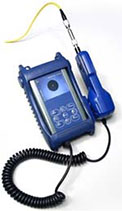
A 400 Power Video Microscope
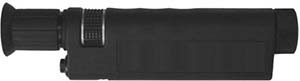
A 400 Power Handheld Microscope
Frequently Asked Questions
If a customer gets a new jumper from the manufacturer and inspects it after taking the end caps off, it would not be uncommon to see some small amount of on contamination on the end d face. This does not mean that the jumper manufacturer’s quality process are lacking. All manufacturers experience this. The customer just needs to work smartly and realize that the end cap is just for protecting against scratches. The best practice is to inspect the ferrule, clean if necessary and re-inspect before mating. If the customer does not have a ferrule scope available, then cleaning both connectors end faces before mating will significantly reduce the likelihood of damage and cross contamination.
The dry wiping process that an operator would do using a Cletop style cassette or One Click style cleaner relies on contact friction to remove contamination. When two materials are rubbed together, there is a transfer of electrons between the two surfaces and the imbalance on the surface creates a charged electric force we call static electricity. The two surfaces, one charged positive and the other negative, will try to pull in surrounding particles to being the charge back into a neutral balance. This attraction pulls in the dust particulates in the air and the wear debris on the connector body and adapter. Fiber optic connectors are all dielectric and when they become charged by dry wiping a ferrule act as an insulator storing the electrical charge because there is no dissipative medium for the charge to flow off to. The problem with charged end faces become greater in in low humidity environments. The introduction of a cleaning solvent during a wet-dry cleaning process introduces static dissipative medium for the charge so that it does not stay on the ferrule surface.
Connectors that have been exposed to medium to severe levels of contamination benefit from the introduction of a cleaning fluid. The cleaning fluid will dissolve the harden contamination on a ferrule end face and loosen it up to be wiped away. Dry cleaning only of hardened contamination may require additional pressure by the operator which frequently leads to surface scratches causing permanent end face defects.
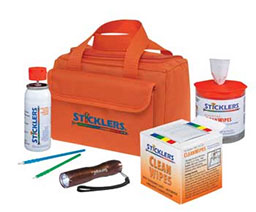
The Sticlklers Fiber Cleaning products
use wet/dry cleaning processes
So we have seen that dirt or other contaminants that reside on fiber optic connector endfaces can cause major problems for the network. Dirt can even cause a slowdown that may not be apparent. And so it is wise for the network manager to have a microscope and fiber optic cleaning kit on hand for inspection and cleaning. If you are diligent with keeping all of the connections clean, you will avoid problems and have a fast running network.
LANShack.com sells all of the fiber optic cleaning supplies that you may need!