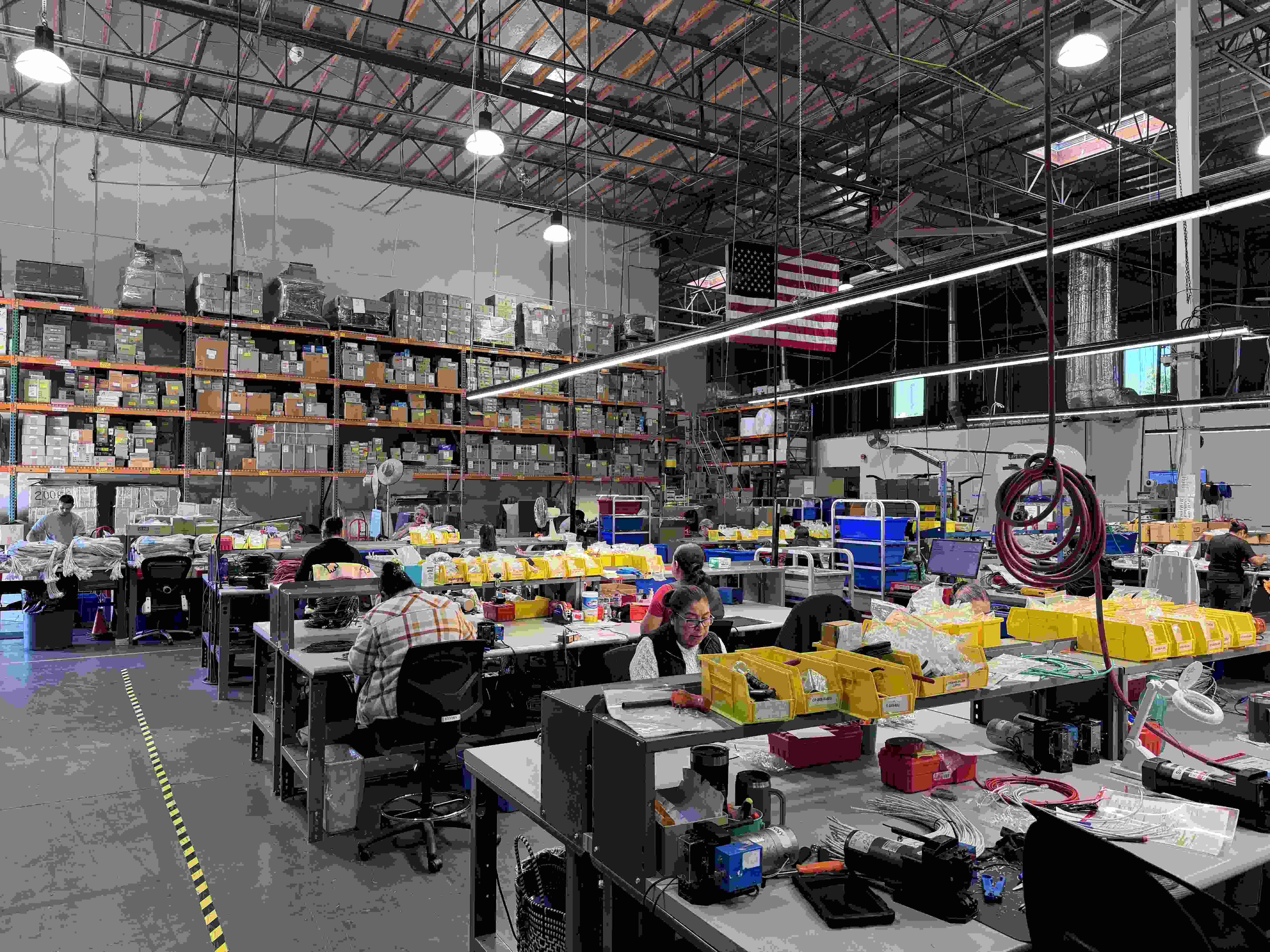










Our website features a wide range of high-quality fiber optic cable assemblies, but have you ever wondered how they’re made? What happens behind the scenes to create these intricate products?
We’re pulling back the curtain to show you the detailed process—from assembly to testing—through a series of photos that highlight how these cables are crafted and prepared for shipment. Every step ensures our products meet the highest standards of performance and reliability, ready to support your next installation.
Featured Products
1. Receiving and Preparing Raw Materials
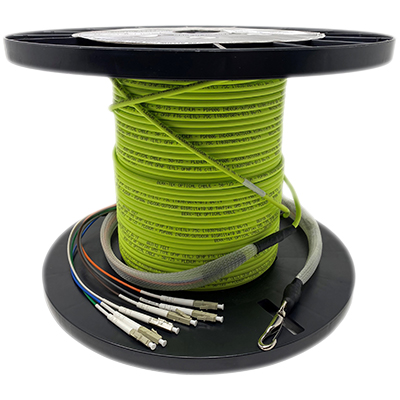
Before production even begins, we ensure the highest standards by carefully sourcing and inspecting our raw materials. This includes bulk fiber optic cables, precision connectors, and durable sheathing—all USA-manufactured and ISO-certified to guarantee quality and consistency.
Upon arrival, materials undergo rigorous inspections to verify they meet strict quality specifications. For example, fiber strands are checked for consistency and connectors are tested for fit and finish. Our warehouse team organizes these materials systematically, prepping them for the assembly process.
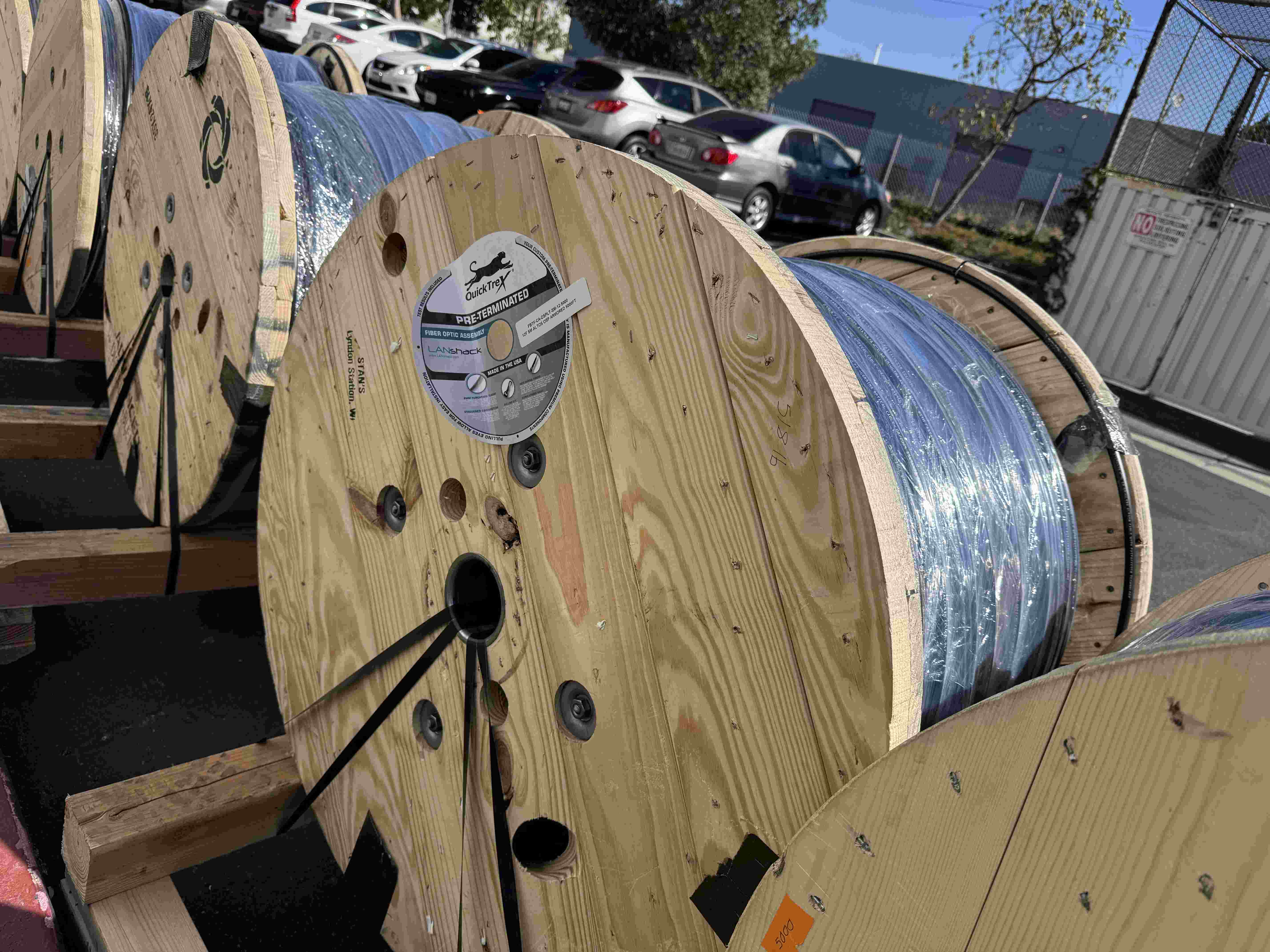
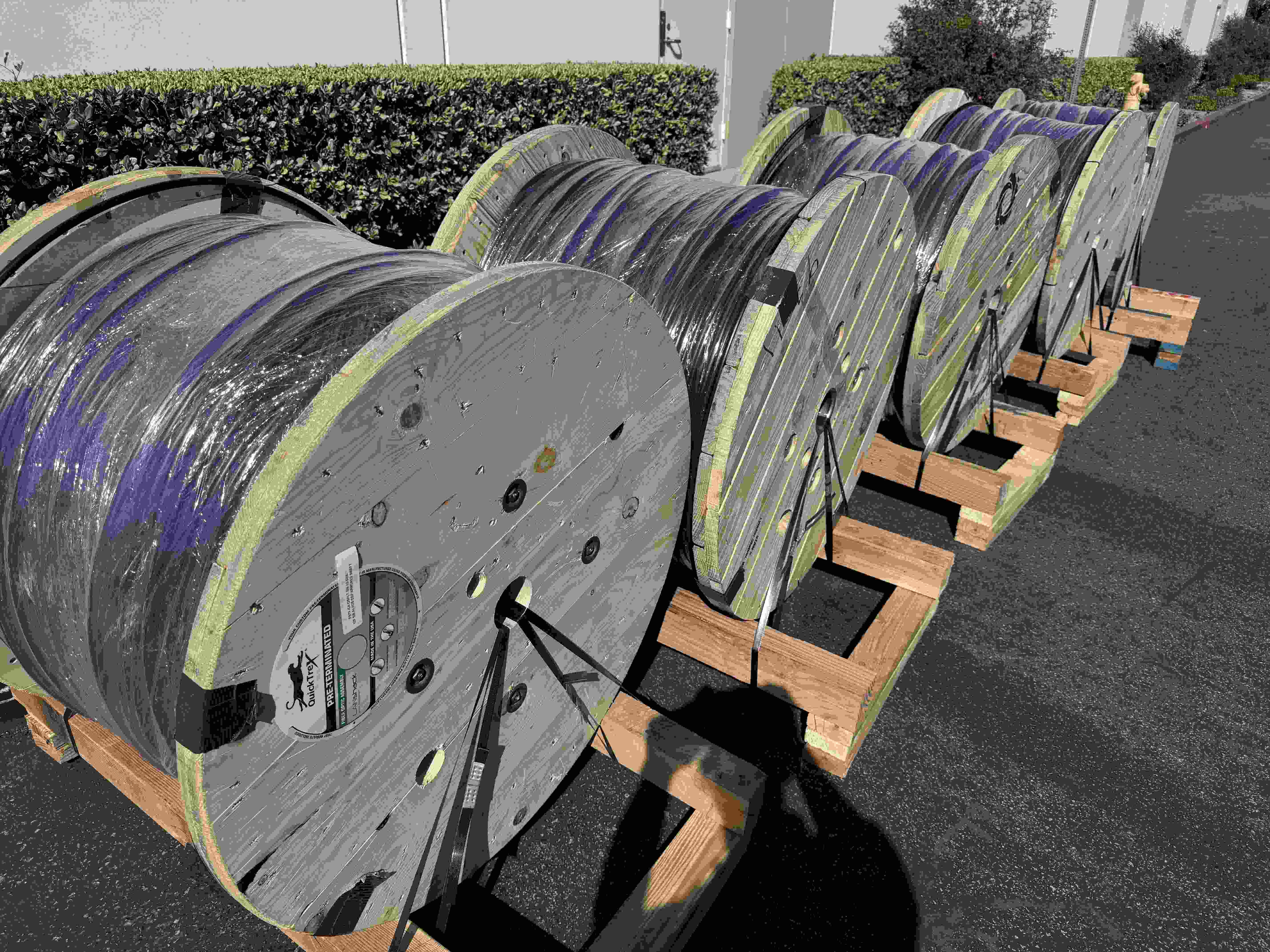
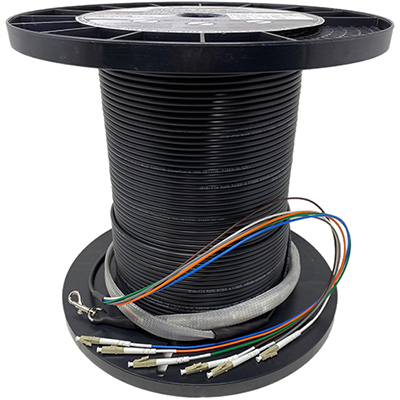
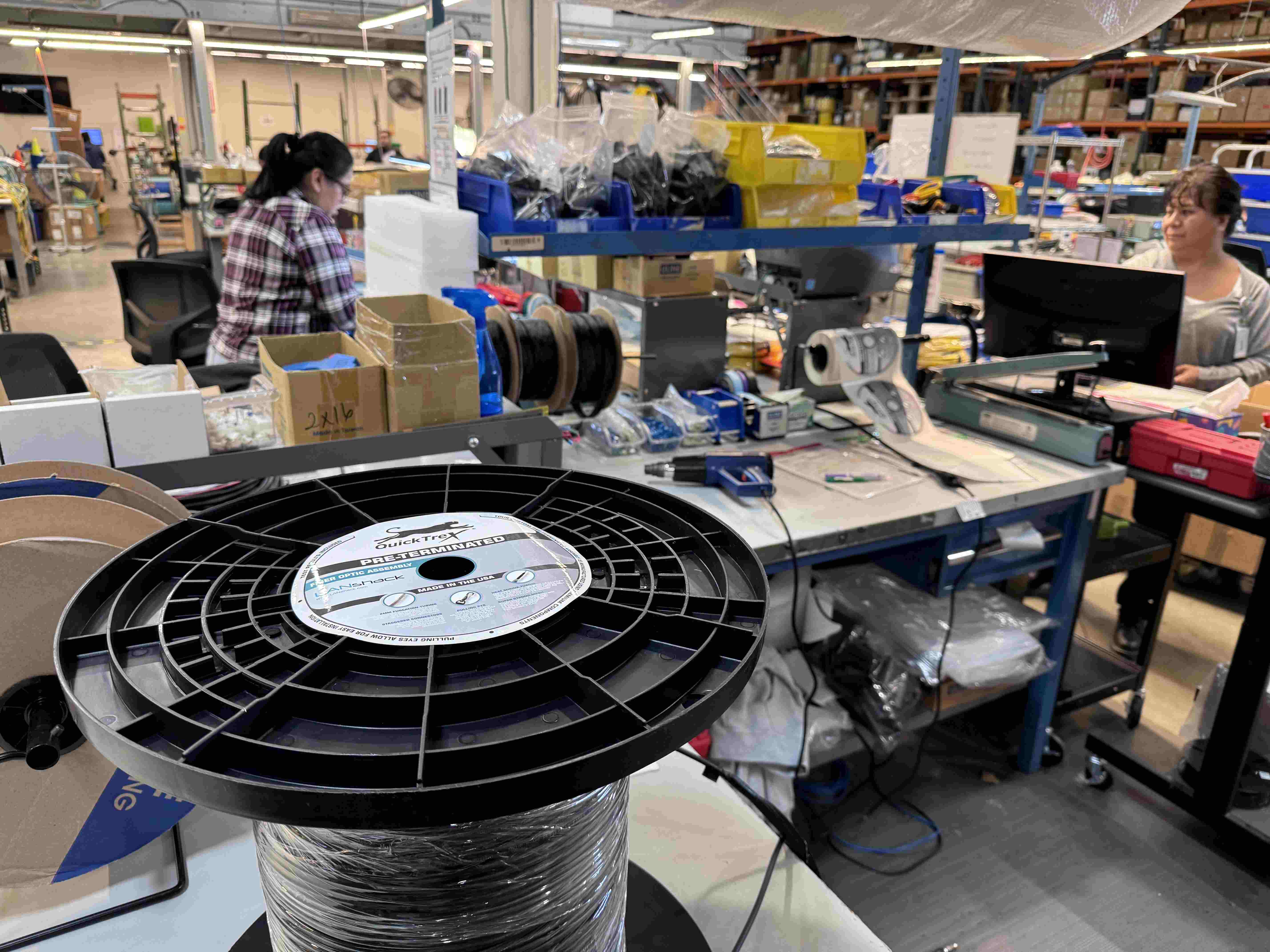
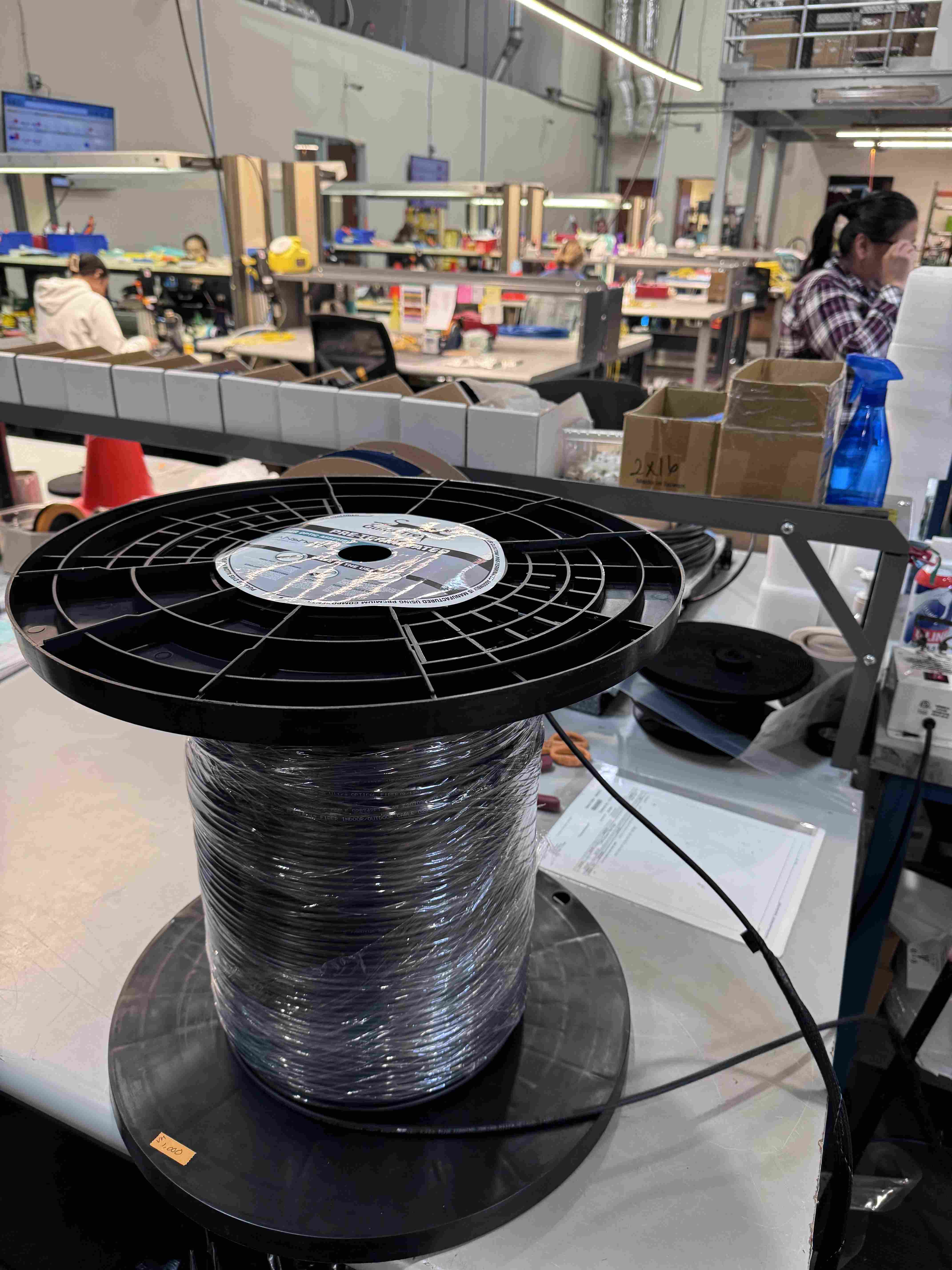
Above we can see the raw cables received and ready to be cut to our customer's desired lengths.
2. Precision Cutting and Furcating
Once materials are prepped, the next step is cutting the bulk fiber optic cables to precise lengths. This process is handled by our state-of-the-art cable cutting machine, which is regularly calibrated to ensure accuracy. Whether the cables are destined for a 2-meter patch cord or a 300-meter run, every cut is exact.
After cutting, the cables are prepared for assembly by applying furcation tubing—a protective layer that ensures durability. Heat-shrinking techniques are used to secure the tubing, creating a clean, reliable foundation for the next steps.
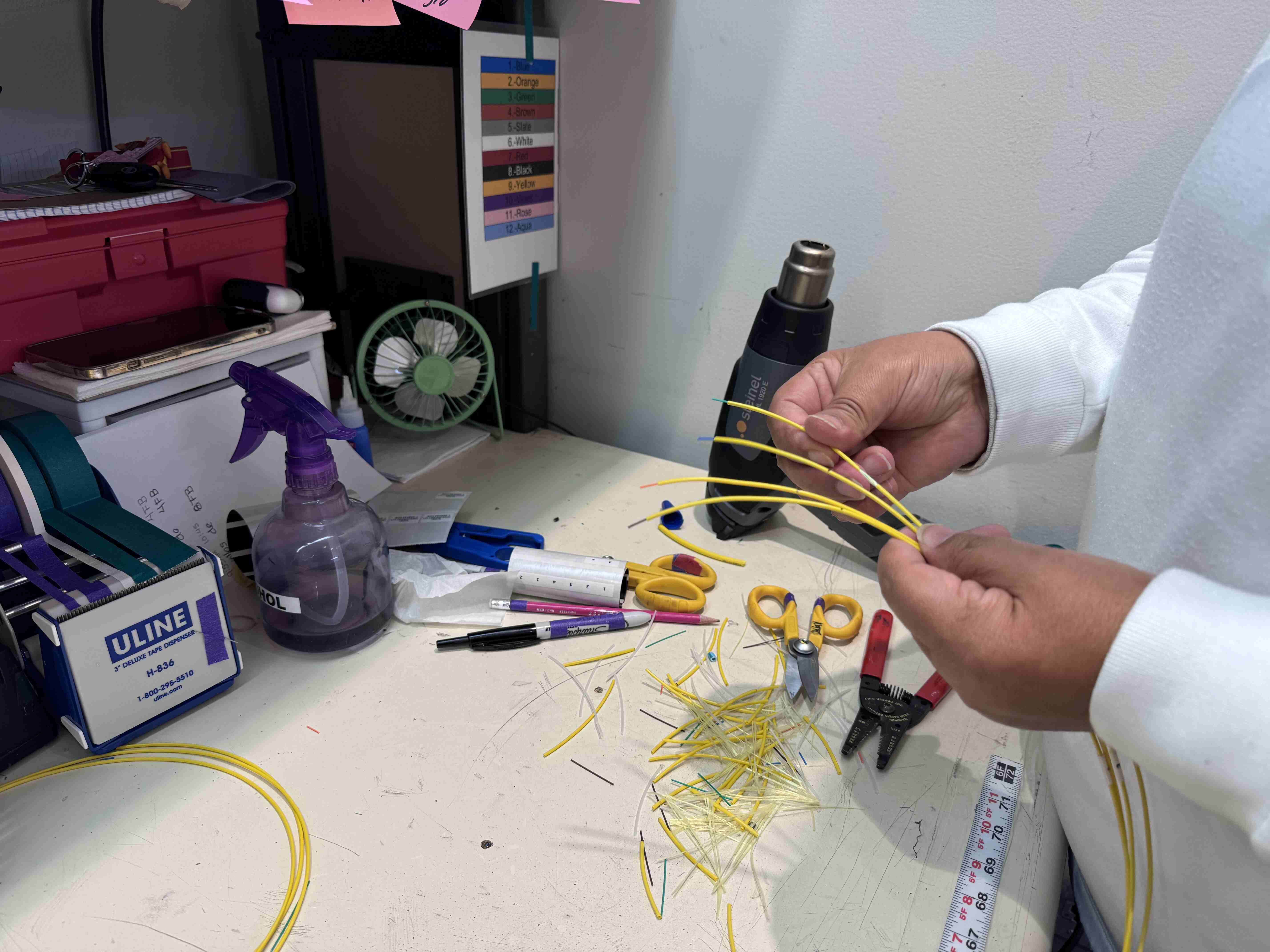
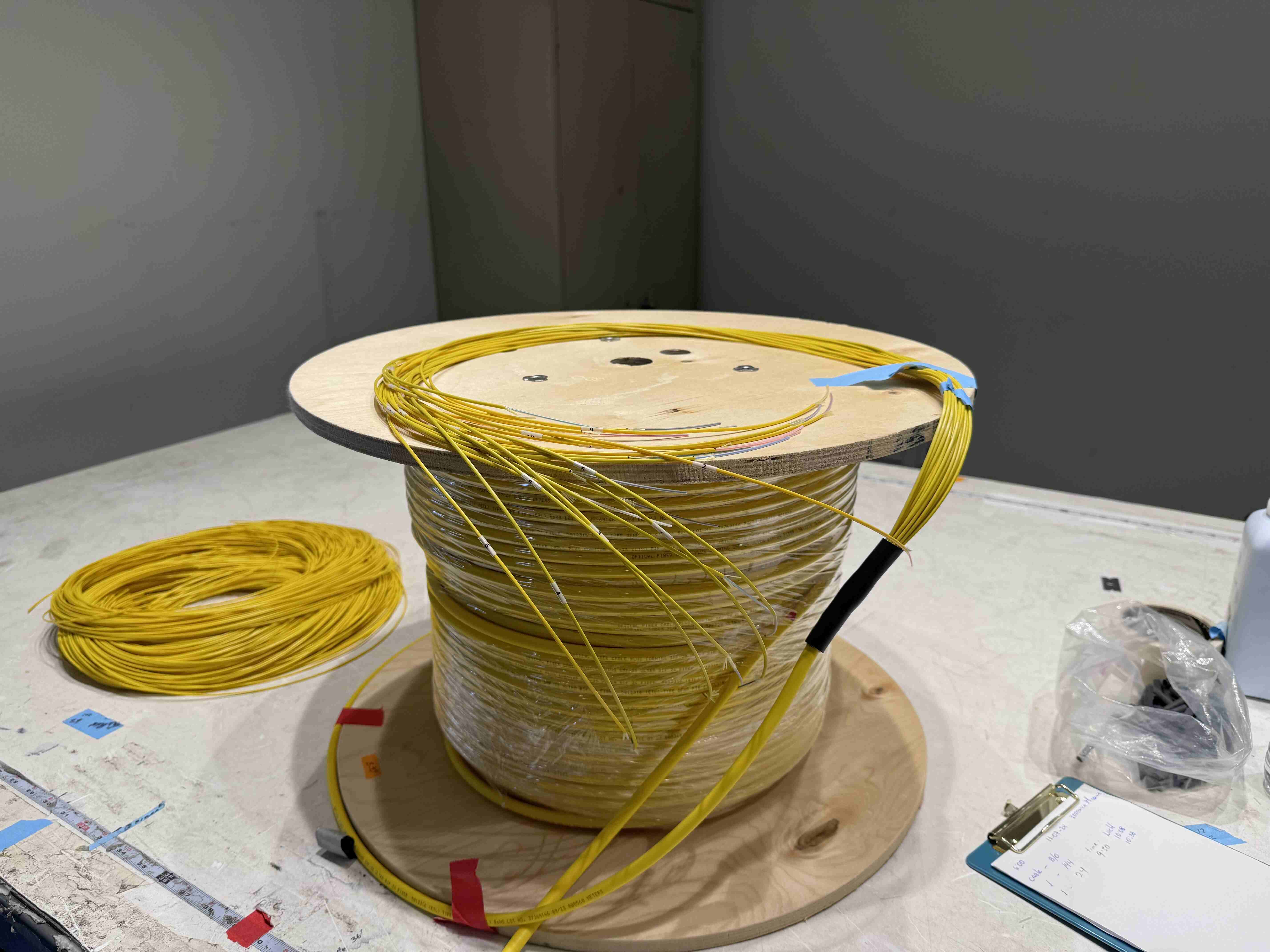
Above, technicians measure and inspect the cables that have been cut using the cable cutting machine
3. Connector Installation
Attaching connectors, often called "connectorizing," is one of the most critical steps in the process. Our skilled technicians use advanced techniques, including epoxy application to attach connectors with precision. These connectors are essential for ensuring strong, reliable signal transmission.
Every connector is meticulously installed to minimize signal loss and maintain the integrity of the fiber. This stage requires steady hands, attention to detail, and extensive training to achieve perfect alignment.
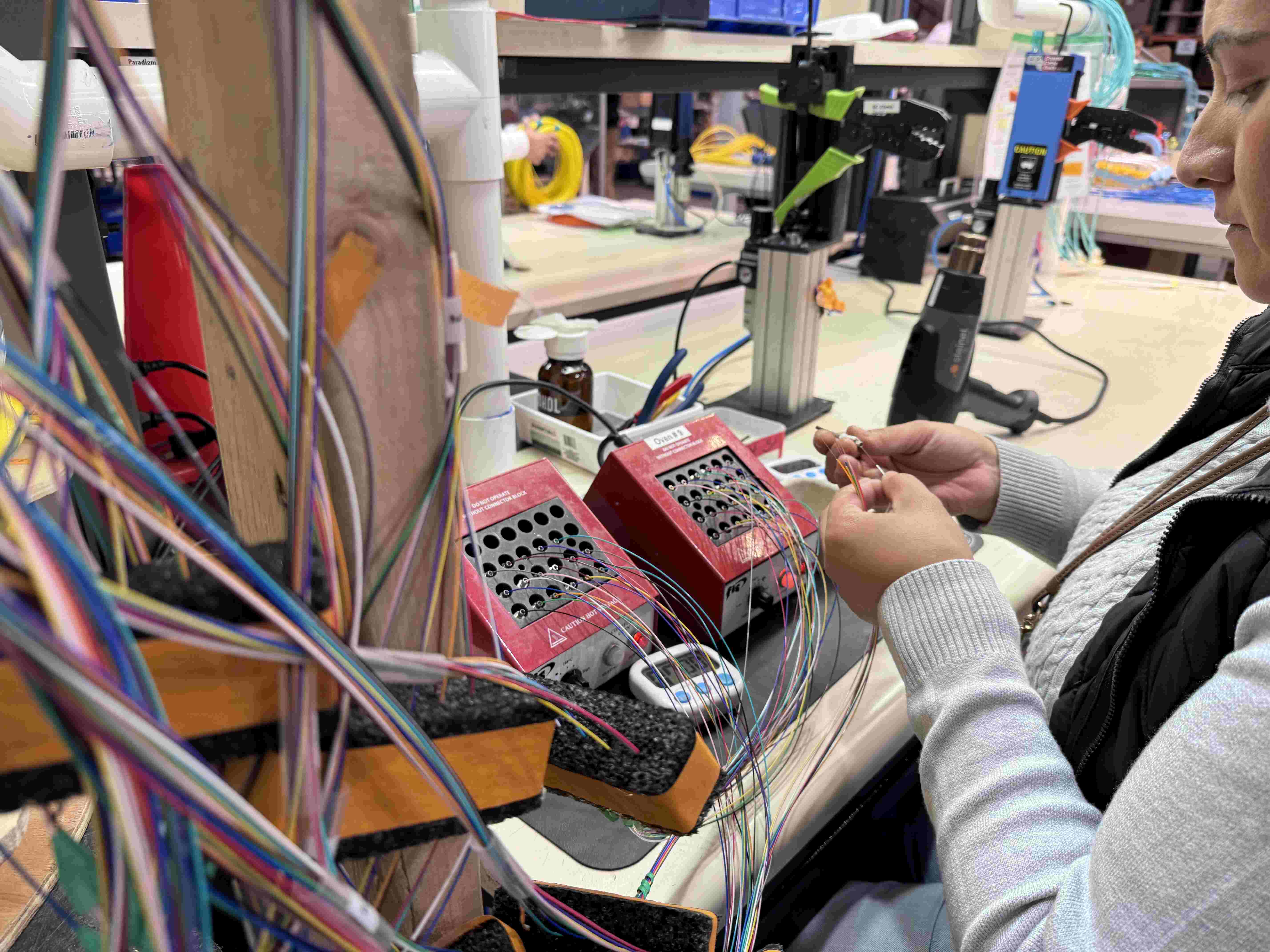
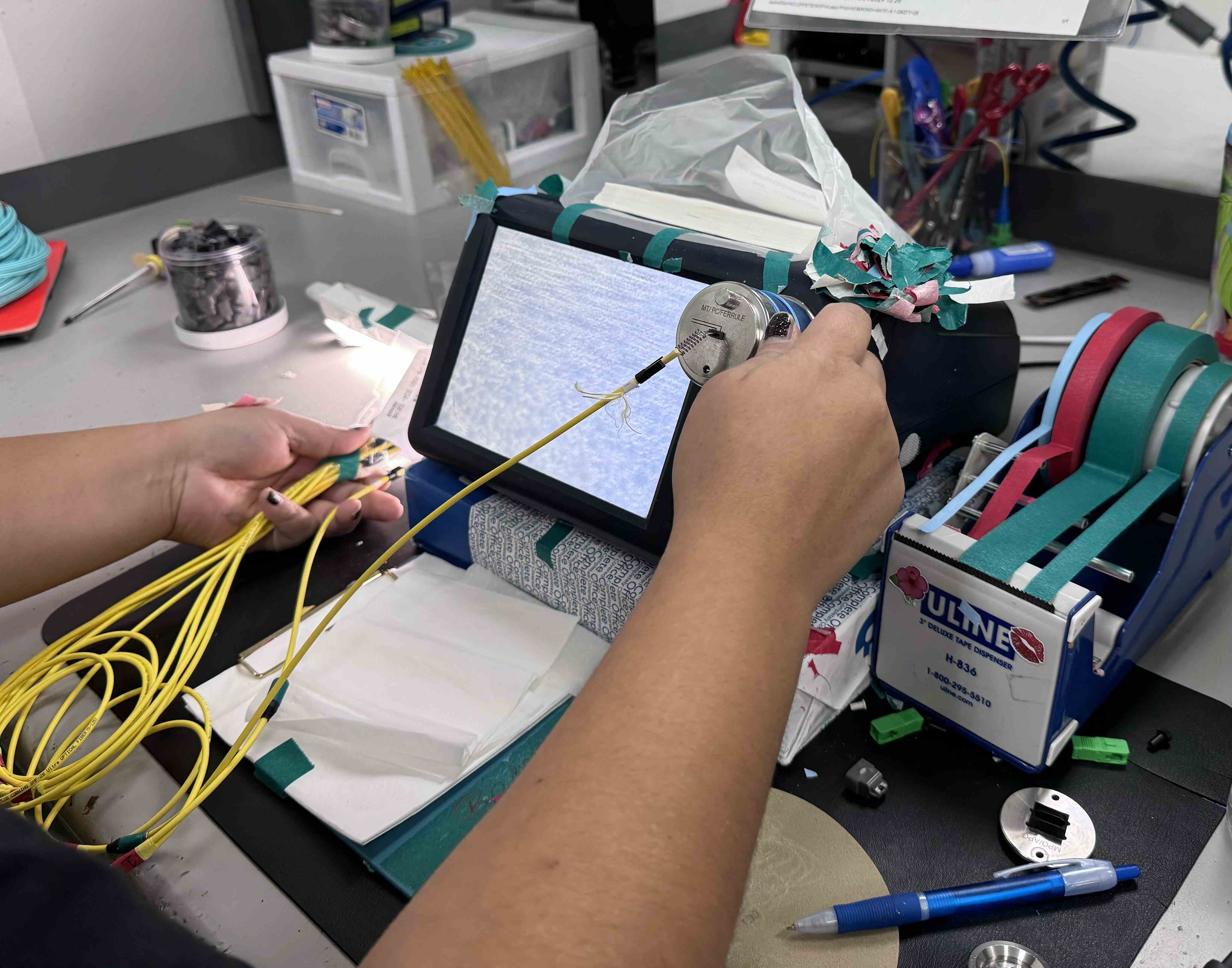
A Close-up shot of a technician attaching connectors using state of the art tools.
4. Polishing and Testing Connectors
Polished connectors are vital for optimal signal transmission, so we take this step seriously. Using specialized polishing equipment, our team ensures that each connector’s surface is perfectly smooth and ready for high-performance use.
After polishing, connectors are tested for signal integrity. This includes visual inspection under microscopes and advanced tools like OTDR and insertion loss testers. Any imperfection is addressed immediately to guarantee performance.
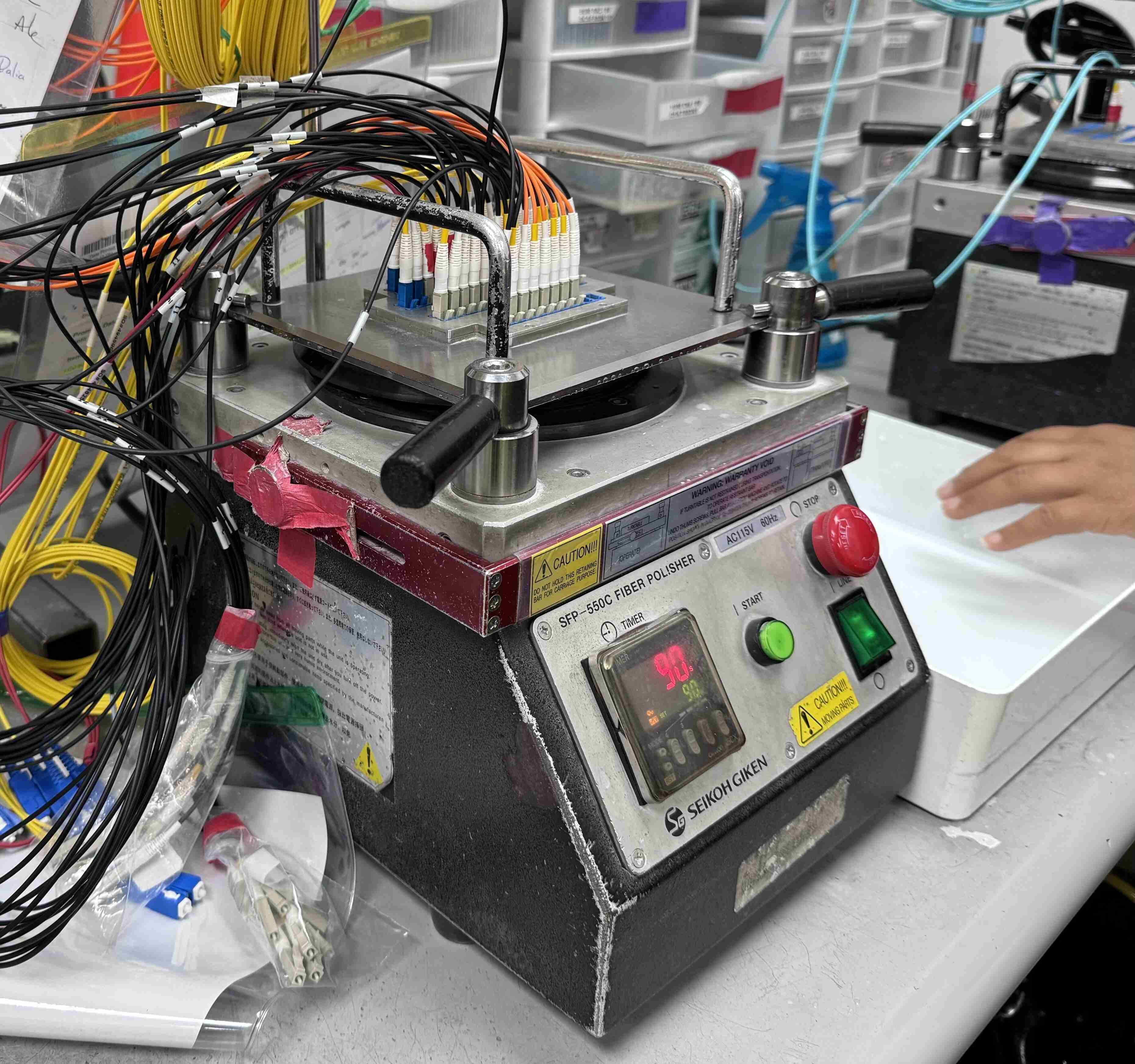
A polishing machine in action with technicians testing connectors with equipment.
5. Inspection, Quality Control, and Testing
Every fiber optic assembly undergoes rigorous testing to ensure it meets industry standards. This includes Fluke testing, OTDR testing, and end-face scoping, where each fiber end is inspected under a microscope to detect contamination or defects.
Our testing procedures aren’t just about meeting benchmarks—they’re about exceeding them. Customers can trust that their assemblies are reliable and ready for high-demand applications.
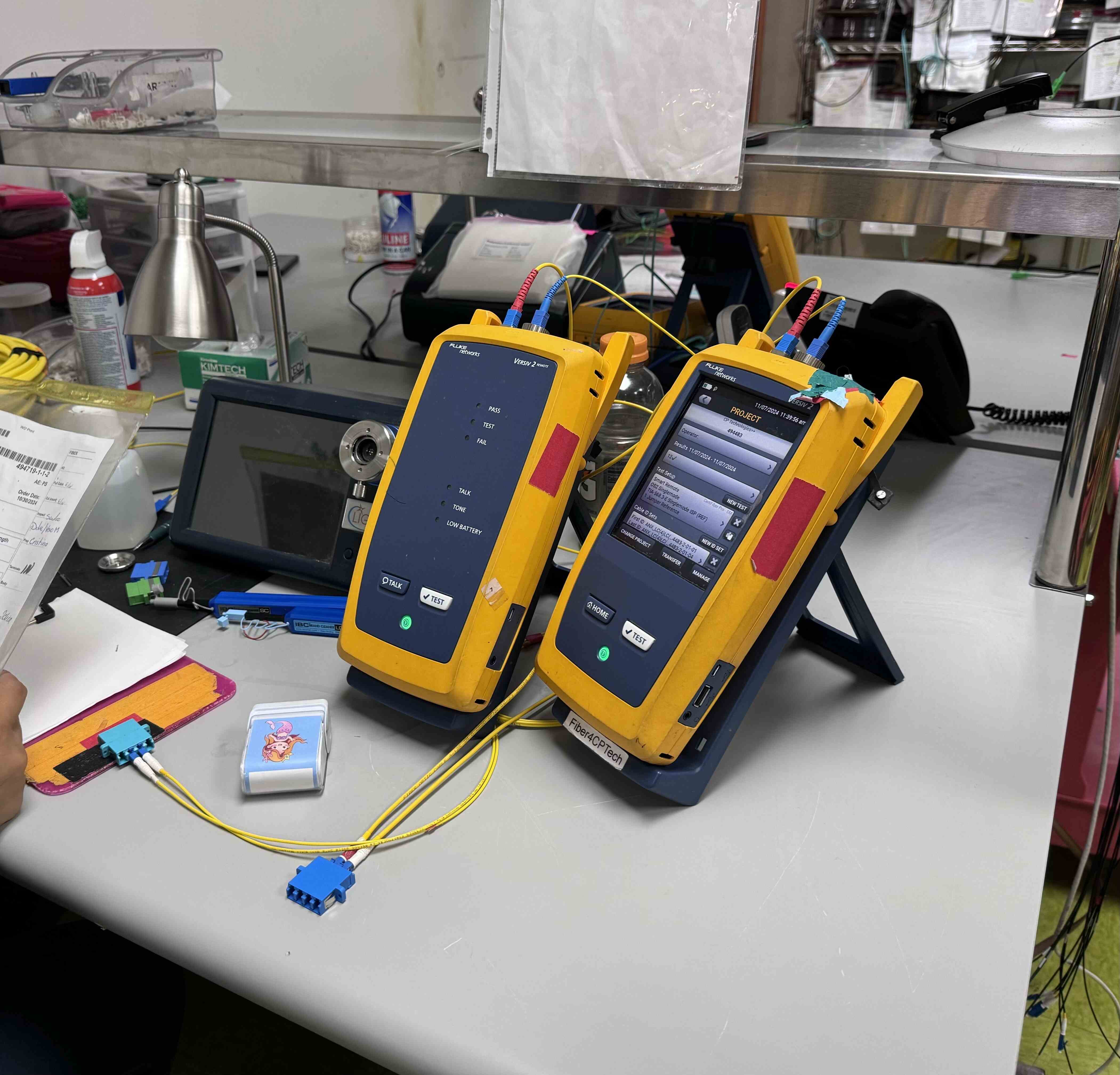
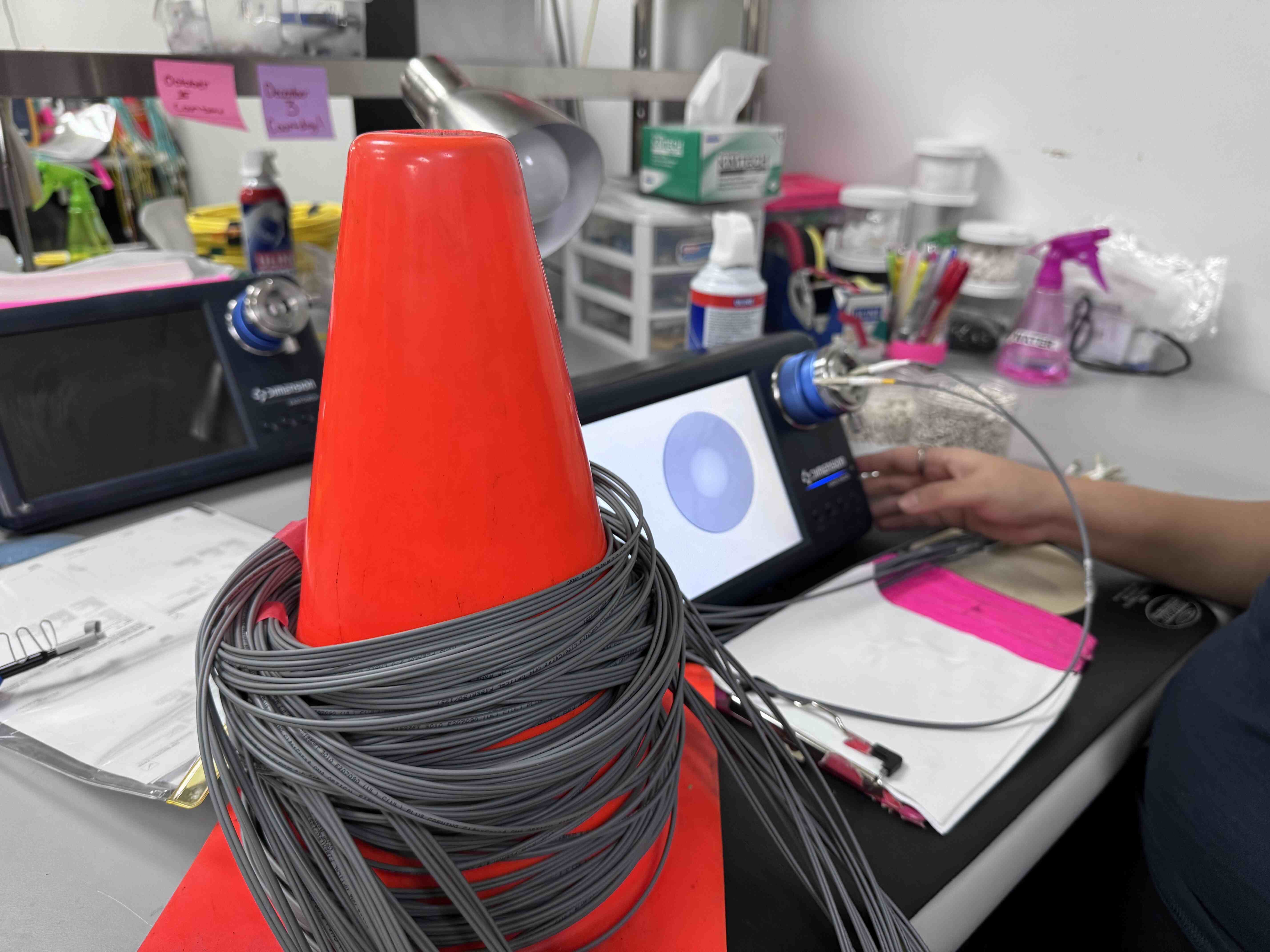
Here we see a technician reviewing test results using fluke testing.
And here we have technicians putting an endface under two different microscopes to check for any contamination.
6. Pulling Eye Installation
For longer cables or those installed in challenging environments, pulling eyes are attached to facilitate safe, easy installation. These durable fittings protect the connectors and ensure the cable can be pulled into place without damage.
7. Packaging and Shipping
Once an assembly passes all quality checks, it’s time to prepare it for delivery. Each cable is carefully coiled, labeled, and packaged to prevent damage during transit. Test results are included with every shipment, giving customers confidence in their purchase.
Whether it’s a small order or a large shipment, our team ensures every package arrives safely and ready to deploy.
Above we see boxes of labeled and packaged assemblies, ready for shipping.
8. The Human Touch Behind the Process
Behind every cable is a team of skilled technicians dedicated to delivering quality. From assembly to testing, their expertise and attention to detail make all the difference. By purchasing from us, you’re not just getting a product—you’re supporting American jobs and craftsmanship.
Our team takes pride in their work, and it shows in the finished product. It’s all about the details. When you see the results of your work in the field, it’s incredibly rewarding for our staff
Crafting high-quality fiber optic cable assemblies is a meticulous process, but it’s one we take great pride in. From sourcing raw materials to final testing and shipping, every step reflects our commitment to precision, performance, and customer satisfaction.
If you’d like to learn more about our custom assemblies or have questions about our products, don’t hesitate to reach out. We’re here to help with your next project.