








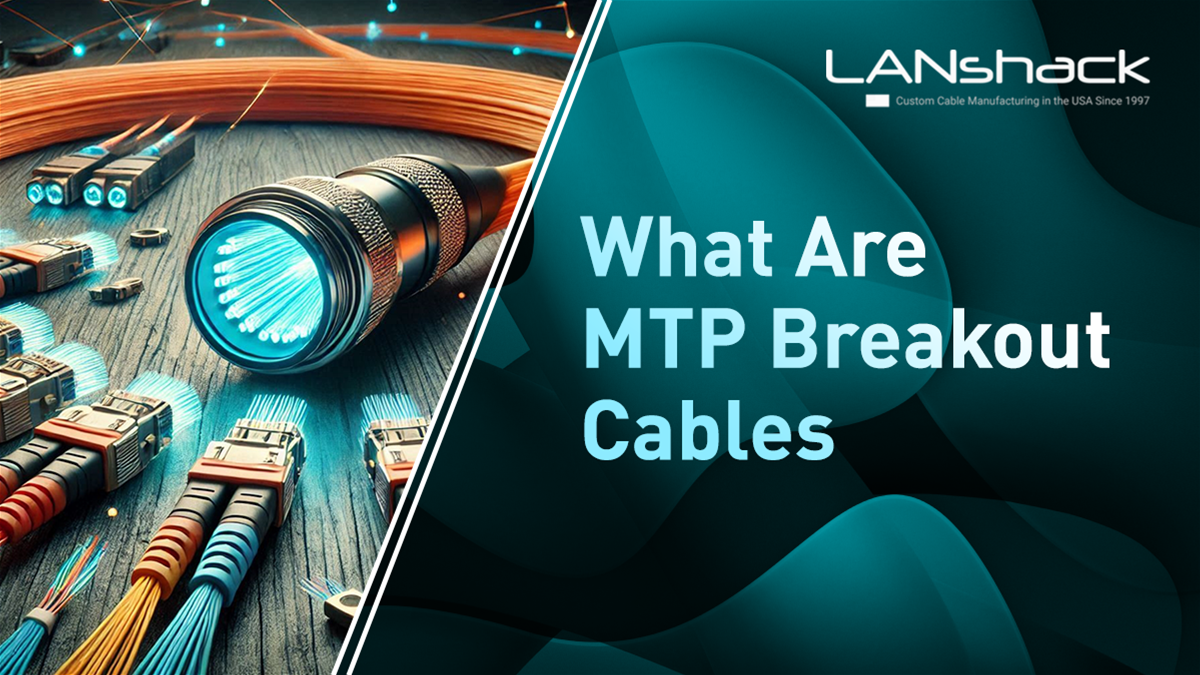


MTP or MPO fanout cables are specialized fiber optic cables designed to convert an MTP trunk assembly into standard fiber optic simplex connectors. They serve as an essential component in high-density network environments, enabling the seamless transition from multi-fiber connectors to individual connections.
Anatomy of MPO Fanout Cables
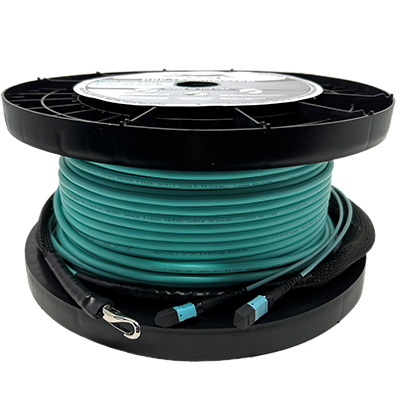
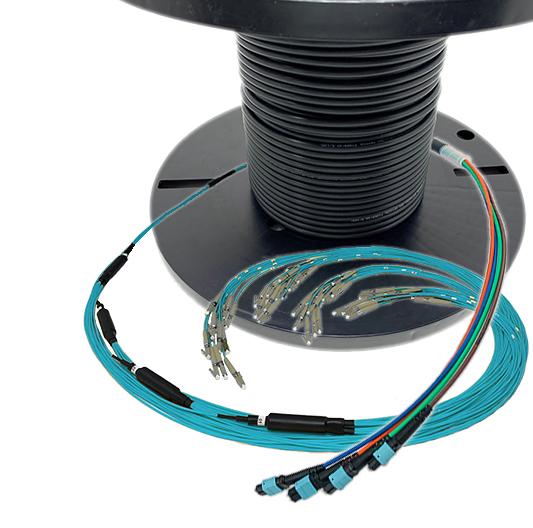
MPO fanout cables consist of a fiber optic cable containing multiple jacketed simplex optical fibers, all packaged together within an outer jacket. This design offers increased strength and durability, although it results in a larger and heavier cable compared to distribution-style cables.
In contrast, distribution-style cables are tightly bundled together with only the outer cable jacket providing protection, making them lighter and more flexible, but less robust than fanout cables.
Watch our TikTok explanation of MPO fanout cables.
How Do Fanout Cables Work?
Fanout cables take the optical signals from a multi-fiber MTP/MPO connector and distribute them into individual simplex connections. Each fiber within the cable corresponds to a single connection, making it easier to integrate with standard networking hardware like patch panels or switches.
These cables are especially useful in scenarios where high-density MTP trunk cables need to interface with equipment that requires individual fiber connections.
What Type of Fiber Needs a Fanout Kit?
Fanout kits are often required when dealing with:
Featured Products

-
Multimode Fiber: Typically used for short-range connections in data centers or campus networks.
-
Singlemode Fiber: Used for long-range connections in telecommunication systems or wide-area networks.
Fanout kits ensure that individual fibers can be securely terminated and connected to networking equipment, preserving signal integrity and minimizing loss.
What Types of Connectors Are Available on Fanout Cables?
MPO fanout cables are available with a variety of connector types to suit different networking needs. Common options include:
-
LC Connectors: Popular for high-density networking due to their compact size.
-
SC Connectors: Larger connectors commonly used in legacy systems.
-
ST Connectors: Twist-lock connectors used in industrial and military applications.
-
FC Connectors: Screw-on connectors designed for high vibration environments.
Each connector type serves specific use cases, so selecting the right one depends on the equipment and application.
How Do I Choose the Right Fanout Cable for My Business Setup?
When selecting an MPO fanout cable, consider the following factors:
-
Fiber Type: Choose between singlemode or multimode based on your network’s range and speed requirements.
-
Connector Type: Match the connectors to the ports on your equipment.
-
Cable Length: Ensure the cable length fits your network layout to avoid unnecessary slack or tension.
-
Durability Needs: Opt for fanout cables if your environment demands a stronger, more robust solution.
Proper planning and understanding of your network’s requirements can help you make an informed decision.
Types of MTP Fanout Cables
MTP fanout cables are categorized based on:
-
Fiber Count: Common options include 8, 12, or 24 fibers.
-
Polarity: Determines the signal flow and compatibility with specific systems.
-
Jacket Type: Options like plenum-rated or armored jackets for different installation environments.
These variations allow businesses to select cables tailored to their specific needs, ensuring efficiency and reliability in their networking setup.
By understanding the functionality and types of MPO fanout cables, you can optimize your network’s performance and ensure seamless connectivity. If you’re unsure which cable suits your setup, consult with a fiber optic specialist to get the best advice for your unique needs.