








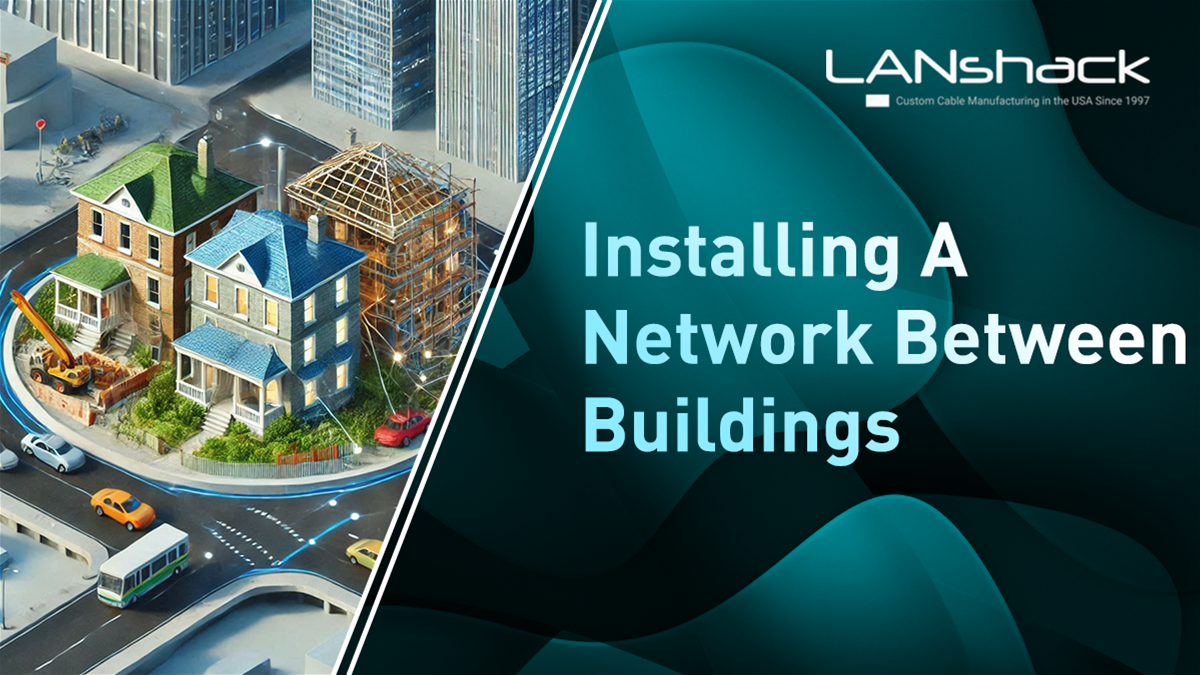


When looking to connect three buildings on a budget, especially with future plans for demolition and rebuilding, flexibility and cost-effectiveness are key considerations. Here’s a breakdown of the best options based on your unique situation:
1. Fixed Wireless Solution
The Ubiquiti Gigabeam is a strong contender for connecting the buildings wirelessly. It's an excellent balance between cost, ease of installation, and performance. Wireless solutions are particularly appealing for temporary setups like this, where trenching and laying fiber might not be justified due to the limited timeframe (3-5 years).
Advantages:
-
Cost-Effective: No trenching required, keeping costs down.
-
Quick Installation: Can be set up in a day and easily realigned if building "C" is demolished.
-
Sufficient Throughput: The Gigabeam offers throughput of up to 1.75 Gbps, which is more than enough for streaming video, CCTV camera feeds, and general web usage.
-
Future-Proof: As it’s temporary, you can easily decommission and relocate the equipment when the new building is constructed.
Considerations:
-
Line of Sight: Wireless solutions like the Gigabeam work best with clear line of sight between the buildings.
-
Internet Bandwidth: Ensure your 50/10 Mbps internet connection can handle live streaming, especially if you're using 4K CCTV feeds or higher quality video.
2. Fiber Optic Cabling
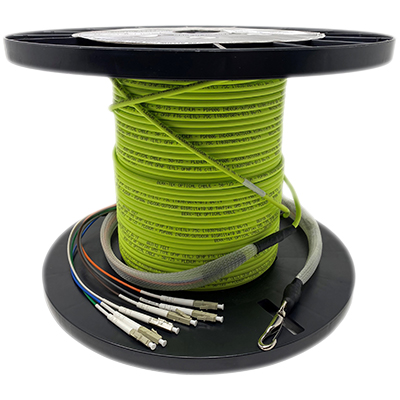
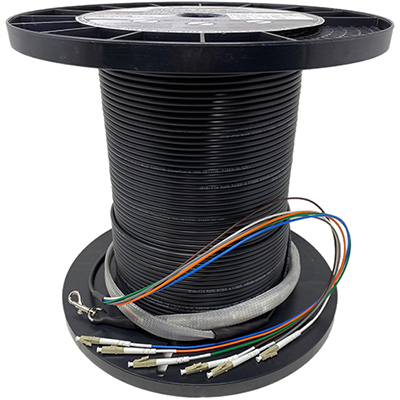
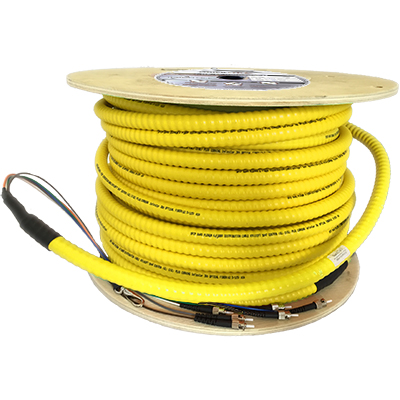
If you’re thinking long-term for connecting buildings "A" and "B", fiber optic is the most reliable and future-proof solution. While it is more expensive and labor-intensive, it offers higher speeds, better stability, and lower latency compared to wireless options. Fiber is especially ideal for scenarios where you’re handling heavy data loads (like 10-15 CCTV cameras).
Featured Products
Advantages:
-
Reliability: Fiber is not affected by weather or physical obstructions and offers superior stability for critical applications.
-
Scalability: Fiber will provide bandwidth far exceeding your current requirements, allowing for future expansion.
-
Longevity: Even after the 3-5 year period, fiber can continue to serve as the backbone for any new infrastructure built on the property.
Considerations:
-
Cost and Labor: Trenching for fiber can be expensive. However, if you have volunteer help for the digging, this could reduce costs significantly.
-
Single-mode vs. Multimode Fiber: For outdoor runs, single-mode fiber is preferred due to its ability to cover long distances without signal degradation. However, for short runs, multimode (like OM3) is also a good option.
3. Hybrid Approach
You may want to consider a hybrid solution:
-
Fiber between buildings "A" and "B" for stability and long-term usage.
-
Wireless for the temporary connection to building "C" until it’s demolished. This reduces the upfront cost and provides flexibility until the new building is constructed.
Conclusion
For a flexible and cost-conscious solution, Gigabeam wireless for the temporary connection between buildings "A", "B", and "C" is the most practical. It’s quick to set up, works well for short distances, and will handle your bandwidth needs, including live streaming and CCTV feeds. For buildings "A" and "B", laying fiber is a solid long-term investment, especially if you’re considering future growth.
In terms of network equipment, UniFi access points are a great choice, offering durability and performance over the 3-5 year span. You may want to explore models with sufficient range to reduce the number of access points required per building.
Lastly, for added network redundancy, you can set up a wireless failover link from buildings "B" to "C" or between all buildings to maintain connectivity even if one link goes down.