SALES & ORDERS


Custom Cable Manufacturing in the USA Since 1997



Industrial, warehouse, and transportation operations rely on sophisticated network infrastructure to coordinate complex automated systems, track inventory in real-time, and maintain seamless communication across extensive facilities. Fiber optic networks provide essential capabilities for modern industrial operations:
Modern manufacturing and warehouse operations depend on high-speed networks to support advanced automation systems including robotics, conveyor controls, and real-time production monitoring. These systems generate massive amounts of data requiring reliable, high-bandwidth connectivity to function efficiently and maintain production schedules.
Industrial facilities, warehouses, and transportation terminals often span hundreds of thousands of square feet with equipment distributed across multiple buildings and outdoor areas. Fiber's ability to transmit data over long distances without signal degradation makes it ideal for connecting distant operations to central control systems.
Manufacturing facilities and transportation hubs contain heavy machinery, motor drives, welding equipment, and electrical systems that generate significant electromagnetic interference. Fiber optic cables are completely immune to EMI, ensuring reliable data transmission even in the most electrically noisy industrial environments.
Industrial operations frequently expand production capacity, add new warehouse zones, or increase transportation throughput. Fiber infrastructure provides the bandwidth headroom and scalability needed to support growth without requiring complete network overhauls.
Industrial automation systems require reliable, real-time communication between PLCs, HMIs, robots, and central control systems to maintain efficient production processes. These networks must support deterministic communication protocols and provide redundancy for critical operations. Key applications include:
Assembly line control networks connecting robotics and conveyor systems
Quality control systems with high-resolution imaging and inspection equipment
Machine-to-machine communication for coordinated manufacturing processes
Modern warehouses rely on sophisticated WMS systems that coordinate automated storage and retrieval, inventory tracking, and order fulfillment processes. These systems require extensive network coverage and high reliability to maintain operational efficiency. Critical deployments include:
Automated storage and retrieval system (AS/RS) networks
RFID and barcode scanning infrastructure for real-time inventory tracking
Warehouse control systems coordinating material handling equipment
Transportation operations require robust connectivity to support vehicle tracking, cargo monitoring, and facility coordination systems. These networks often extend across multiple locations and require integration with external systems. Applications include:
Loading dock management systems with real-time scheduling and tracking
Vehicle tracking and fleet management networks
Intermodal facility networks connecting rail, truck, and shipping operations
Industrial facilities must maintain comprehensive safety monitoring and security systems to protect personnel, equipment, and inventory. These networks require high reliability and often mandate redundant pathways for critical alerts. Examples include:
Perimeter security with video surveillance and access control systems
Industrial safety networks including emergency stops and safety interlocks
Fire detection and suppression system networks
Industrial environments expose network equipment to dust, moisture, temperature extremes, vibration, and chemical exposure. Equipment must meet appropriate environmental ratings (IP65/66/67) and utilize industrial-grade components designed for continuous operation in challenging conditions.
Manufacturing and logistics operations often require 24/7 uptime with minimal tolerance for network outages that can halt production or disrupt supply chains. Network designs must incorporate redundancy, failover capabilities, and rapid recovery mechanisms.
Industrial networks must support specialized communication protocols including EtherNet/IP, PROFINET, and Modbus TCP. Network infrastructure must provide the deterministic performance and low latency required by these industrial applications.
Industrial facilities frequently undergo expansions, equipment additions, and process improvements. Network infrastructure must be designed with sufficient capacity and flexibility to accommodate future growth without major overhauls.
Industrial companies typically integrate network infrastructure upgrades with major capital projects such as new production lines, warehouse automation systems, or facility expansions. These projects often involve substantial investments with multi-year implementation timelines.
Network investments are evaluated based on their ability to improve operational efficiency, reduce downtime, enable predictive maintenance, and support lean manufacturing initiatives. Reliable networks can prevent costly production stoppages and improve overall equipment effectiveness (OEE).
Industry 4.0 initiatives and digital transformation programs drive network infrastructure investments as companies seek to implement IoT sensors, advanced analytics, and cloud-based systems that require robust connectivity.
Regulatory compliance and safety standards may mandate network upgrades to support required monitoring systems, safety interlocks, or environmental reporting capabilities.
Yes, we offer industrial-grade fiber optic cables and equipment designed for demanding environments including chemical-resistant jackets, crush-resistant designs, and environmental ratings up to IP68 for wash-down areas and outdoor installations.
Fiber optic technology excels at long-distance transmission. Our singlemode fiber solutions can span several kilometers without repeaters, making them ideal for connecting buildings across large industrial campuses and warehouse complexes.
Absolutely. Our fiber infrastructure supports all major industrial Ethernet protocols including EtherNet/IP, PROFINET, and Modbus TCP through compatible industrial switches and media converters designed for deterministic performance.
We design redundant fiber networks with ring topologies, diverse routing, and rapid spanning tree protocols to ensure critical production systems remain operational even during equipment failures or maintenance activities.
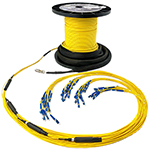
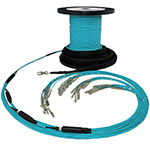
We utilize pre-terminated fiber assemblies, quick-connect solutions, and phased installation approaches to minimize disruption to ongoing operations. Many installations can be completed during scheduled maintenance windows.
Properly installed industrial fiber infrastructure typically provides 20+ years of reliable service with minimal maintenance, offering excellent long-term value and reducing the need for frequent technology refreshes compared to copper alternatives.