SALES & ORDERS


Custom Cable Manufacturing in the USA Since 1997



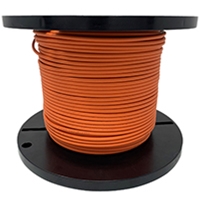
Our OM1 62.5/125 multimode fiber optic cable is ideal for reliable multimode fiber connections in short-distance networking applications. Available in multiple strand counts, it's perfect for legacy systems and less demanding environments.
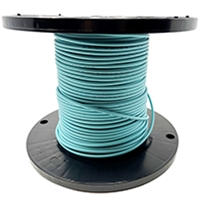
The OM3 50/125 multimode fiber optic cable is designed for high-performance networks, offering enhanced bandwidth to support 10-Gigabit Ethernet and other high-speed data transmission requirements.
For high-speed data transmission in multimode setups, the OM4 50/125 multimode fiber optic cable ensures superior performance and is perfect for modern enterprise networks, data centers, and high-bandwidth applications.
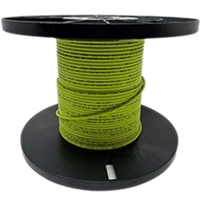
Our OM5 50/125 multimode fiber optic cable is optimized for advanced multimode fiber systems, offering superior performance for 10G, 40G, 100G, and even 400G networks. It supports wavelength division multiplexing (WDM) for greater capacity and future-proofing.
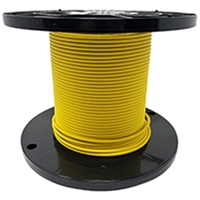
The Singlemode fiber optic cable is the ideal choice for long-distance data transmission in high-bandwidth applications. Perfect for telecommunications, CATV, and telecom networks, it ensures minimal attenuation and signal integrity over long distances.
Industries such as telecommunications, data centers, enterprise networks, and educational institutions rely on fiber optic cables for their high-speed, long-distance networking needs. Whether you are expanding a campus network, building out a data center, or creating a telecom infrastructure, these cables provide the performance and reliability you need.
These fiber optic cables by the foot are perfect for custom installations in a wide range of environments. Use them for telecommunications networks, local area networks (LANs), data center connections, and high-performance environments requiring flexibility and custom length solutions.
OM1 is best for legacy networks with short-distance needs, while OM3, OM4, and OM5 support higher speeds and bandwidths. OM3 is optimized for 10-Gigabit networks, OM4 is suitable for 40-Gigabit systems, and OM5 is engineered for the highest performance, including support for 100G and 400G networks.
We offer various jacket types to suit different environments:
Indoor: For standard indoor installations
Indoor/Outdoor: For applications requiring protection from both indoor and outdoor elements
Outdoor OSP Gel-Filled: Provides extra protection for outdoor installations
Interlocking Armor: Offers superior durability and protection from physical damage
MicroArmor®: A flexible, stainless-steel-coiled jacket ideal for harsh environments
Aerial: Specifically designed for aerial installations where cables are suspended in the air
Yes, we cut fiber optic cables to custom lengths, so you only pay for what you need. We can also add pulling eyes on one or both ends to facilitate easier installation.
The strand count you choose depends on your network needs. 2 strands are often used for point-to-point connections, while 6, 12, or 24 strands are typically used for more complex installations, such as fiber optic panels or patch panels in data centers and other high-demand environments.
Indoor fiber optic cable is a tight buffer design with internal components consisting of a non-metallic strengthen member, the tight buffer optical fiber, the Kevlar strength member, and the outer cable jacket. The trend is to use LSZH or other RoHS compliant PVC materials to make the cable jacket; this will help protect the environment and the health of the end-users.
Indoor/outdoor fiber-optic cable is designed to meet both the rigorous environment of the outdoors and can be routed indoors, where flame rating requirements also apply. Indoor-outdoor cable eliminates the need for a "transition splice" to an indoor-rated cable when routing an outdoor cable into the building.
Interlocking armored cables are standard distribution cables inside a spirally-wrapped aluminum interlocking armor with a heavy-duty outer jacket. This combination provides superior crush resistance and is also useful for warehouses or attic areas where the presence of rodent chew hazards may exist.
Our Ultra Thin Armored Pre-Terminated Fiber Optic Assemblies utilize Micro Armor Fiber™. A revolutionary designed fiber optic cable that provides a perfect solution for your fiber optic installs and usage. Instead of a traditional interlocking armor, it utilizes stainless steel coil technology. This allows for the cable to remain highly flexible while also being crush and rodent resistant. Micro Armor Fiber™ features the smallest outer diameter compared to conventional armored fiber optic cable in size and flexibility.
Its lightweight and great flexibility make pulling and installation faster and easier. These assemblies are typically up to 65 percent smaller in diameter and 75 percent lighter than the traditional aluminum interlocking armor cable. These assemblies provide a perfect combination of strong armor and maximum bend radius. Choosing an armored jacket helps save time and money in indoor applications where innerduct or conduit is necessary, or in industrial environments which require extra protection. Although this option is priced higher than standard indoor distribution cable, it outweighs its overall price when compared to the cost of purchasing innerduct/conduit, indoor fiber, and installation for both.
Gel-filled fiber-optic cables ensure water or moisture does not damage a fiber optic cable because the tubes contain water blocking agents. These tubes either include a water blocking gel or a water-swellable material to ensure the optical fibers are not compromised. Gel-filled tubes prevent the ingress of water by filling the negative space within the tube, essentially blocking the entrance and any flow of water. The gel also provides another layer of protection for the optical fibers and, because they are free-floating, causes less tension on the fibers. The main disadvantage of gel-filled loose tube fiber optic cable is that you have to clean the gel from the fibers which slow down the installation process and can be a mess for installers.
Jacket Slitter or Stripper: A cutter for removing the heavy outside jacket of cables
Fiber Stripper: A precise stripper used to remove the buffer coating of the fiber itself for termination. There at three types in common use, called by their trade names: "Miller Stripper", "No-Nik" and "Micro Strip."
Cleaver: A tool that precisely "breaks" the fiber to produce a flat end for polishing or splicing.
Scribe: A hard, sharp tool that scratches the fiber to allow cleaving.
Polishing Puck: for connectors that require polishing, the puck holds the connector in proper alignment to the polishing film.
Polishing Film: Fine grit film used to polish the end of the connector ferrule.
Crimper: A tool that crimps the connector to the aramid fibers in the cable to add mechanical strength.
Here is more information on termination.