SALES & ORDERS


Custom Cable Manufacturing in the USA Since 1997



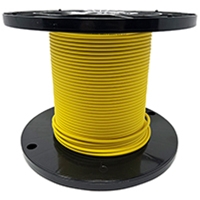
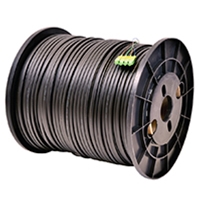
We provide fiber optic cable by the foot in various types, including OM1, OM3, OM4, and OM5, with strand counts of 2, 6, 12, and 24. Jacket options encompass indoor, indoor/outdoor, outdoor OSP gel-filled, interlocking armor, MicroArmor®, and aerial. This flexibility allows for customized installations tailored to specific project requirements.
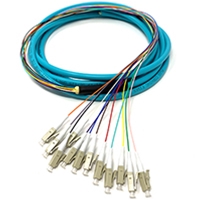
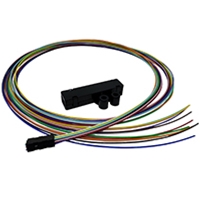
Our fiber optic pigtail kits are available in 6 and 12 strands, supporting multimode OM1, OM3, OM4, and singlemode fibers. Connector options include LC, LC APC, SC, and ST. Each kit features color-coded strands for easy identification and sequencing, and is packaged in a clamshell for quick access and organization during installation.
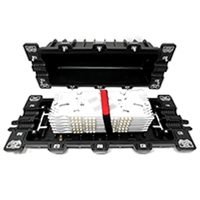
To house and protect fiber optic splices, we offer splice trays accommodating 12 to 24 fibers. Our wall-mount fiber optic enclosures are designed for 1, 2, and 4-panel configurations, providing secure and organized management of fiber connections in various installation environments.
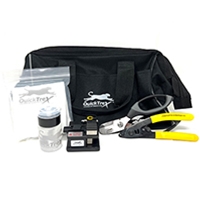
We supply a range of professional-grade tools necessary for fiber optic cable preparation and termination. For instance, our QuickTreX Professional Grade 5-In-1 Fiber Optic Cable Stripping Tool is designed to precisely strip 2-3mm fiber optic cable jackets and 250-900 micron buffers, ensuring clean and accurate terminations.
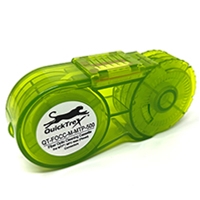
Maintaining clean fiber optic connectors is crucial for optimal network performance. We offer various cleaning solutions, such as the QuickTreX Fiber Optic Cleaning Pen, designed for SC, ST, and FC 2.5mm adapters and ferrules, providing over 800 cleans. Additionally, our cleaning sticks and wipes facilitate effective removal of contaminants from connector end faces.
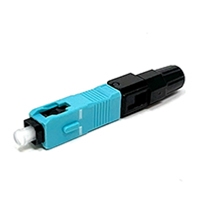
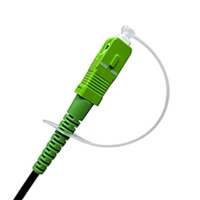
Our selection includes a variety of fiber optic connectors compatible with different cable types and installation requirements, ensuring reliable and efficient network connections.
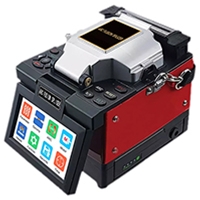
We offer fusion splicer kits that include all necessary components for splicing fiber optic cables, facilitating efficient and reliable splicing operations for both singlemode and multimode fibers.
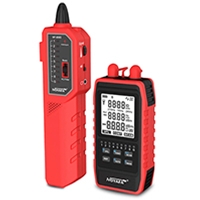
To ensure the integrity and performance of fiber optic installations, we provide test instruments capable of performing visual inspections, loss testing, and network troubleshooting, aiding in the identification and resolution of connectivity issues.
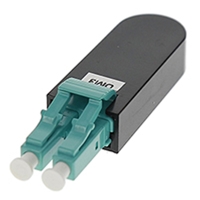
Our fiber optic loopback testers are essential for testing and diagnosing issues within fiber optic networks, enabling verification of transceiver functionality and network configurations.
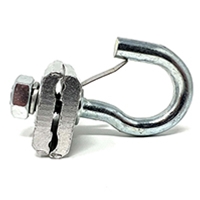
We supply various mounting hardware solutions designed to securely install and manage fiber optic components, ensuring organized and efficient cable management in diverse installation environments.
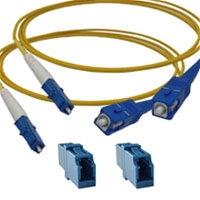
Our fiber optic reference cable kits are used to connect different types of connectors to test instruments, facilitating accurate testing and calibration of fiber optic networks. Each kit includes two simplex patch cables and two simplex fiber optic couplers, all made in the USA.
Industries such as telecommunications, data centers, healthcare, education, and government agencies rely on fiber optic products for high-speed data transmission and reliable network infrastructure. These products are essential for establishing and maintaining robust communication networks capable of handling large volumes of data with minimal latency.
Fiber optic products are commonly used in network installations, upgrades, and maintenance to ensure high-performance data transmission. They are employed in applications such as internet service provision, cable television, medical imaging, and military communications, where high bandwidth and data integrity are critical.
We offer various types of fiber optic cables, including OM1, OM3, OM4, and OM5, with different strand counts and jacket options to suit diverse installation needs.
Selecting the appropriate pigtail kit depends on factors such as the type of fiber (multimode or singlemode), the number of strands required, and the preferred connector type (LC, SC, ST, etc.).
Regular cleaning of fiber optic connectors is vital to maintain optimal network performance, as contaminants can cause signal loss and degrade the quality of data transmission.
Essential tools for fiber optic cable termination include cable strippers, cleavers, crimpers, and fusion splicers, all designed to ensure precise and reliable terminations.
Utilizing fiber optic test instruments allows for the assessment of network performance through visual inspections, loss measurements, and verification of signal integrity, helping to identify and address potential issues.
Picture sending signals zipping along from one location to another in the form of light guided through thin fibers of glass or plastic. These signals can be analog or digital - voice, data or video information and fiber can transport more information longer distances in less time than any copper wire.
It's powerful and fast, fast, fast!
First get to know the language - the "jargon" - here's a list of terms you should get to know:
Metric System: Fiber Optics, as a universal technology, utilizes the metric system as the standard form of measurement.
Several of the more common terms:
Meter: 3.28 Feet (3.28084 ft. to be precise).
Kilometer: 1000 meters / 3,281 feet / 0.62 miles.
Micron: 1/1,000,000th of a meter. 25 microns equal 0.001 inch. This is the common term of measurement
for fibers.
Nanometer: One billionth of one meter. This term is commonly used in the fiber optics industry to express wavelength or frequency of transmitted light.
Optical Fiber: Thin strands of highly transparent glass or sometimes plastic that guide light.
Core: The center of the fiber where the light is transmitted.
Cladding: The outside optical layer of the fiber that traps the light in the core and guides it along - even through curves.
Buffer coating or primary coating: A hard plastic coating on the outside of the fiber that protects the glass from moisture or physical damage.
Mode: A single electromagnetic field pattern (think of a ray of light) that travels in fiber.
Multimode fiber: has a bigger core (almost always 62.5 microns - a micron is one one millionth of a meter - but sometimes 50 microns) and is used with LED sources at wavelengths of 850 and 1300 nm for short distance, lower speed networks like LANs.
Singlemode fiber: has a much smaller core, only about 9 microns, and is used for telephony and CATV with laser sources at 1300 and 1550 nm. It can go very long distances at very high speeds.
Both multimode and singlemode fiber have an outside diameter of 125 microns - about 5 thousandths of an inch - just slightly larger than a human hair.
Plastic optical fiber (POF): is a large core (about 1mm) multimode fiber that can be used for short, low speed networks. POF is used in consumer HiFi and starting to be used as part of a new standard for car communication systems called MOST.
For more on optical fiber, go here.
Cable: Fiber needs protection to survive all the places it gets installed and it's the cable that provides it. Cables may have from one to hundreds of fibers inside.
Jacket: The tough outer covering on the cable. Cables installed inside buildings must meet fire codes by using special jacketing materials.
Strength members: Aramid fibers (Kevlar is the duPont trade name) used to pull the cable. The term is also used for the fiberglass rod in some cables used to stiffen it to prevent kinking.
Armor: Discourages rodents from chewing through it.
Go here for more on cables.
Connector: A non-permanent device for connecting two fibers or fibers to equipment where they are expected to be disconnected occasionally for testing or rerouting. It also provides protection to both fibers. (Parts for an ST connector are shown.)
Ferrule: A tube which holds a fiber for alignment, usually part of a connector
Splice: a permanent joint between two fibers
Mechanical Splice: A splice where the fibers are aligned created by mechanical means
Fusion Splice: A splice created by welding or fusing two fibers together
Fusion Splicer: An instrument that splices fibers by fusing or welding them, typically by electrical arc.
Hardware: Terminations and Splices require hardware for protection and management: patch panels, splice closures, etc.
Here's more on terminations.
Attenuation: reduction in optical power as it passes along a fiber, usually expressed in decibels (dB). See optical loss.
Bandwidth: The range of signal frequencies or bit rate within which a fiber optic component, link or network will operate.
Decibels (dB): A unit of measurement of optical power which indicates relative power. A -10 dB means a reduction in power by 10 times, -20 dB means another 10 times or 10 times overall, -30 means another 10 times or 1000 times overall and so on.
dB: Optical power referenced an arbitrary zero level
dBm: Optical power referenced to 1 milliwatt
Micron (m): A unit of measure used to measure wavelength of light.
Nanometer (nm): A unit of measure used to measure the wavelength of light (meaning one one-billilonth of a meter).
Optical Loss: The amount of optical power lost as light is transmitted through fiber, splices, couplers, etc, expressed in dB.
Optical Power: is measured in "dBm", or decibels referenced to one miliwatt of power. while loss is a relative reading, optical power is an absolute measurement, referenced to standards. You measure absolute power to test transmitters or receivers and relative power to test loss.
Scattering: The change of direction of light after striking small particles that causes loss in optical fibers and is used to make measurements by an OTDR
Wavelength: A term for the color of light, usually expressed in nanometers (nm) or microns (m). Fiber is mostly used in the infrared region where the light is invisible to the human eye.
Go here for more information on testing.
Jacket Slitter or Stripper: A cutter for removing the heavy outside jacket of cables
Fiber Stripper: A precise stripper used to remove the buffer coating of the fiber itself for termination. There at three types in common use, called by their trade names: "Miller Stripper", "No-Nik" and "Micro Strip."
Cleaver: A tool that precisely "breaks" the fiber to produce a flat end for polishing or splicing.
Scribe: A hard, sharp tool that scratches the fiber to allow cleaving.
Polishing Puck: for connectors that require polishing, the puck holds the connector in proper alignment to the polishing film.
Polishing Film: Fine grit film used to polish the end of the connector ferrule.
Crimper: A tool that crimps the connector to the aramid fibers in the cable to add mechanical strength.
Here is more information on termination.
Optical Power Meter: An instrument that measures optical power from the end of a fiber
Test Source: an instrument that uses a laser or LED to send an optical signal into fiber for testing loss of the fiber
Optical Loss Test Set (OLTS): A measurement instrument for optical loss that includes both a meter and source
Reference Test Cables: short, single fiber cables with connectors on both ends, used to test unknown cables.
Mating Adapter: also called splice bushing or couplers, allow two cables with connectors to mate.
Fiber Tracer: An instrument that allows visual checking of continuity and tracing for correct connections
Visual Fault Locator: A device that allows visual tracing and testing of continuity.
Microscope: used to inspect the end surface of a connector for flaws or dirt