

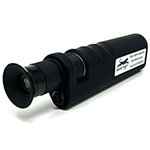
Custom-Built for Your Application
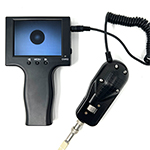
A reliable fiber optic inspection microscope is a must-have for field technicians, installers, and network engineers. Whether you need a compact, handheld solution for quick inspections or a high-magnification video microscope for detailed analysis, these tools help maintain the integrity of your fiber optic connections.
Key Features & Benefits:
-
High-Magnification Inspection – Available in 250X, 400X, and 600X magnifications to suit different inspection needs.
-
Versatile Connector Compatibility – Supports common connector types, including LC, SC, ST, and FC.
-
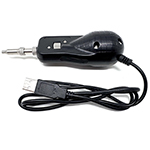
Enhanced Viewing Options – Choose from handheld optical microscopes or digital video microscopes with LCD screens or USB connectivity.
-
Built-In Infrared (IR) Filter – Protects the user’s eyes from potentially harmful laser emissions.
-
Illuminated Viewing – White LED lighting enhances visibility for precise inspections.
-
Durable & Portable – Comes with a protective carrying case for secure storage and transport.
Available Configurations for These Products
These fiber optic inspection microscopes come in stock configurations, ensuring fast shipping. While customization is not available for this product line, we offer a range of models with different magnification levels and display options to meet your needs.
-
Magnification Options: 250X, 400X, and 600X.
-
Display Types: Optical eyepiece, built-in LCD screen, or USB connectivity for external display.
-
Connector Compatibility: Includes adapters for 1.5mm and 2.5mm ferrules (compatible with LC, SC, ST, and FC connectors).
-
Power Source: Battery-operated (AAA batteries for optical models) or USB-powered for digital models.
Common Uses for Fiber Optic Inspection Microscopes
-
Telecommunications & Data Centers – Ensure clean, high-quality fiber optic connections for high-speed networks.
-
Fiber Optic Installation & Maintenance – Inspect backbone fiber runs and patch cords before connecting them to equipment.
-
Laboratory & Research Applications – Analyze fiber optic connectors under controlled conditions for quality assurance.
-
Industrial & Military Applications – Maintain reliable fiber optic communication in mission-critical environments.
FAQ
How do I know if my fiber optic connector needs cleaning?
A visual inspection with a fiber optic microscope will reveal dust, oil, or other contaminants. If contamination is present, clean the connector before use to prevent signal loss or damage.
What’s the difference between optical and video fiber inspection microscopes?
An optical microscope provides a direct view of the fiber endface through an eyepiece, while a video microscope displays the image on an LCD screen or external monitor. Video microscopes are ideal for detailed inspections and documentation.
Do these microscopes work with all fiber optic connectors?
Yes, these microscopes include adapters for the most common connector types (LC, SC, ST, FC). If you need to inspect other types of connectors, check compatibility before purchase.
Are these microscopes safe to use with live fiber?
No, never inspect live fiber. The built-in IR filter provides some protection, but exposure to active fiber optic signals can be hazardous. Always ensure the fiber is not transmitting before inspection.